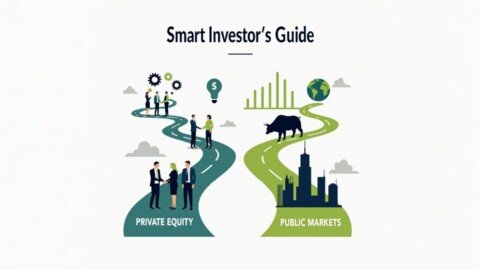


Did you know that 90% of individual investors lose money in the stock market? From emotional trading to chasing “hot tips,” most people sabotage their own success without realizing it.
But here’s the good news: The top 10% of investors win consistently—not because they’re geniuses, but because they follow a proven system.
This article reveals:
The 5 deadly mistakes that destroy portfolios
Warren Buffett’s #1 secret to compounding wealth
A step-by-step strategy anyone can implement
Whether you’re a beginner or seasoned investor, these insights could mean the difference between retiring early or working forever.
Why Most Investors Fail (The 5 Deadly Mistakes)
1. Emotional Investing
Buying when markets are euphoric (FOMO)
Panic-selling during crashes
Result: The average investor underperforms the market by 4% annually (Dalbar Study)
2. Chasing “Get Rich Quick” Schemes
Penny stocks
Crypto hype cycles
Reality: 97% of day traders lose money (FINRA)
3. Overcomplicating Their Strategy
Trying to time the market
Owning 50+ stocks (diluting returns)
Truth: Simplicity beats complexity (Jack Bogle proved it)
4. Ignoring Fees & Taxes
Paying 2% in fund fees = Losing 63% of potential returns over 40 years
Not using tax-advantaged accounts (401k, IRA)
5. No Long-Term Plan
Reacting to CNBC headlines
Changing strategies every year
The Proven Strategy: How the Smart Money Really Invests
The wealthiest investors (like Buffett, Bogle, and Lynch) all follow the same core principles:
1. Own the Entire Market (For Free)
Low-cost index funds (S&P 500 ETF: 10% avg. annual return)
Example: $10,000 in VOO (2009) → $60,000+ today
2. Automate & Never Time the Market
Dollar-cost averaging: Invest fixed amounts monthly
Result: You buy more shares when prices are low
3. Hold for Decades
$10,000 in the S&P 500 (1990) → $200,000+ today
Secret: Compounding does the heavy lifting
4. Keep Costs Razor-Thin
Index funds cost 0.03% vs. active funds at 1-2%
Saves $500,000+ over a lifetime
5. Tune Out the Noise
Ignore 99% of financial media
Rebalance just 1-2x/year
Case Study: The Janitor Who Died With $8 Million
Ronald Read (a gas station attendant and janitor) amassed $8M through:
Buying and holding blue-chip stocks (Johnson & Johnson, Procter & Gamble)
Living below his means
Never selling during crashes
His secret? Time in the market > timing the market.
Your 3-Step Action Plan
1. Start Today (Even With $100)
Open a brokerage account (Fidelity, Vanguard)
Buy VTI (Total Stock Market ETF) or VOO (S&P 500 ETF)
2. Automate Your Investments
Set up recurring transfers from your paycheck
Increase contributions 1% annually
3. Protect Your Mindset
Write this on your wall: *”I will not sell for 10+ years”*
Check your portfolio no more than quarterly
Advanced Tactics (Once You’ve Mastered the Basics)
Tax Optimization
Max out 401k/Roth IRA first
Use tax-loss harvesting
Diversify Slightly
10% in real estate (REITs)
5% in bonds (if over 50)
Avoid These “Sophisticated” Traps
Stock picking (Even pros fail at this)
Leverage (Margin kills accounts)
Options trading (Casino odds)
FAQs: Why You’re Still Nervous (And What to Do)
What if the market crashes?
Good! You’ll buy more shares at a discount.
The market has always recovered (eventually).
How much should I invest monthly?
15% of income is ideal, but start with any amount.
$500/month at 10% = $1M in 30 years
Should I invest in individual stocks?
Only with 5% or less of your portfolio (for fun).
What about crypto/alternative investments?
Treat as speculation, not investing. Limit to 1-5%.
When will I see results?
Year 1: Boring
Year 10: “Wow, this actually works!”
Year 30: Life-changing wealth
Conclusion: The Boring Path to Becoming Rich
The biggest investing secret? There is no secret.
Wealth is built by:
Owning great assets (the whole market)
Holding them forever
Ignoring everyone trying to scare you
Your Next Step: Open your brokerage account today and buy your first ETF. Future you will high-five present you.
Internal Links:
External Links:
Remember: The stock market is a device for transferring money from the impatient to the patient. Be the patient one.