
What separates high achievers from those who stagnate? It’s not talent, luck, or IQ.
The real differentiator is mindset.
Research shows that people with a growth mindset—who believe skills can be developed—outperform those with a fixed mindset (who think abilities are static).
In this guide, you’ll learn:
✔ The science behind growth vs. fixed mindsets
✔ How to rewire your brain for success
✔ Daily habits to cultivate resilience & progress
✔ Real-world examples of mindset transformations
Ready to unlock your untapped potential? Let’s dive in.
Growth Mindset vs. Fixed Mindset: What’s the Difference?
Fixed Mindset Traits (Limiting Beliefs)
“I’m just not good at this.”
“Failure means I’m not smart enough.”
“I avoid challenges to protect my ego.”
Growth Mindset Traits (Empowering Beliefs)
“I can improve with effort.”
“Mistakes help me learn.”
“Challenges make me stronger.”
Stanford research found that students with a growth mindset outperformed fixed-mindset peers by 30%—simply because they embraced effort over innate talent.
How a Growth Mindset Rewires Your Brain for Success
Neuroplasticity: Your Brain Can Change
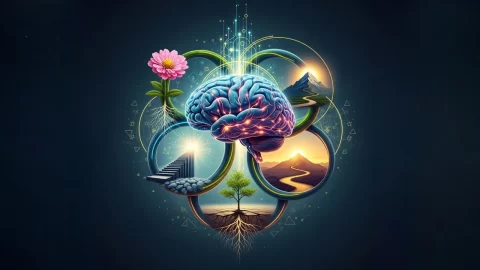
Brains grow like muscles—the more you challenge them, the stronger they get.
Learning new skills forms new neural pathways.
The Power of “Yet”
Fixed: “I can’t do this.”
Growth: “I can’t do this YET.”
This tiny word shifts failure from permanent to temporary.
5 Daily Habits to Build a Growth Mindset
1. Reframe Challenges as Opportunities
Instead of “This is too hard,” say “This is my chance to grow.”
2. Celebrate Effort, Not Just Results
Praise progress (“You worked hard!”) over outcomes (“You’re so smart!”).
3. Learn from Criticism (Without Taking It Personally)
Ask: “What can I improve?” instead of “They think I’m dumb.”
4. Surround Yourself with Growth-Minded People
You become the average of the 5 people you spend the most time with.
5. Visualize Your Future Self
Write down where you’ll be in 5 years if you keep growing vs. if you stay stagnant.
Real-Life Success Stories: Mindset in Action
Michael Jordan: Cut from His High School Team
Fixed mindset reaction: “I’m not meant for basketball.”
Growth mindset reaction: “I’ll train harder than anyone.”
Result: 6 NBA championships.
J.K. Rowling: Rejected by 12 Publishers
Fixed mindset reaction: “I’m a failure.”
Growth mindset reaction: “I’ll keep improving my craft.”
Result: Harry Potter became a global phenomenon.
The Link Between Mindset and Peak Performance
Why Growth-Minded People Achieve More
Embrace discomfort (where growth happens)
Bounce back faster from setbacks
Stay motivated long-term (because progress fuels passion)
How Elite Athletes & CEOs Use This
Tom Brady: Went from 199th draft pick to 7-time Super Bowl champ through relentless improvement.
Satya Nadella (Microsoft CEO): Transformed Microsoft by shifting company culture to “learn-it-all” vs. “know-it-all.”
FAQs: Growth Mindset Myths & Truths
Can adults develop a growth mindset?
Absolutely! Neuroplasticity works at any age—your brain can change.
Is a growth mindset just “positive thinking”?
No. It’s strategic effort + learning from failure—not blind optimism.
How long does it take to shift mindsets?
Consistent practice rewires your brain in 3-6 months (like building a habit).
Can you have a growth mindset in some areas but not others?
Yes! Most people are mixed—strong in some areas, fixed in others.
Does a growth mindset guarantee success?
No—but it maximizes your potential by making you resilient and adaptable.
Conclusion: Your Mindset Determines Your Future
Your potential isn’t set in stone. It’s unlocked by how you think.
Start today:
Catch fixed-mindset thoughts (“I can’t”) and reframe them (“I’m learning”).
Embrace challenges—they’re growth opportunities in disguise.
Surround yourself with people who push you to improve.
The difference between who you are and who you can become lies in one mental shift. Will you make it?
Sources: