


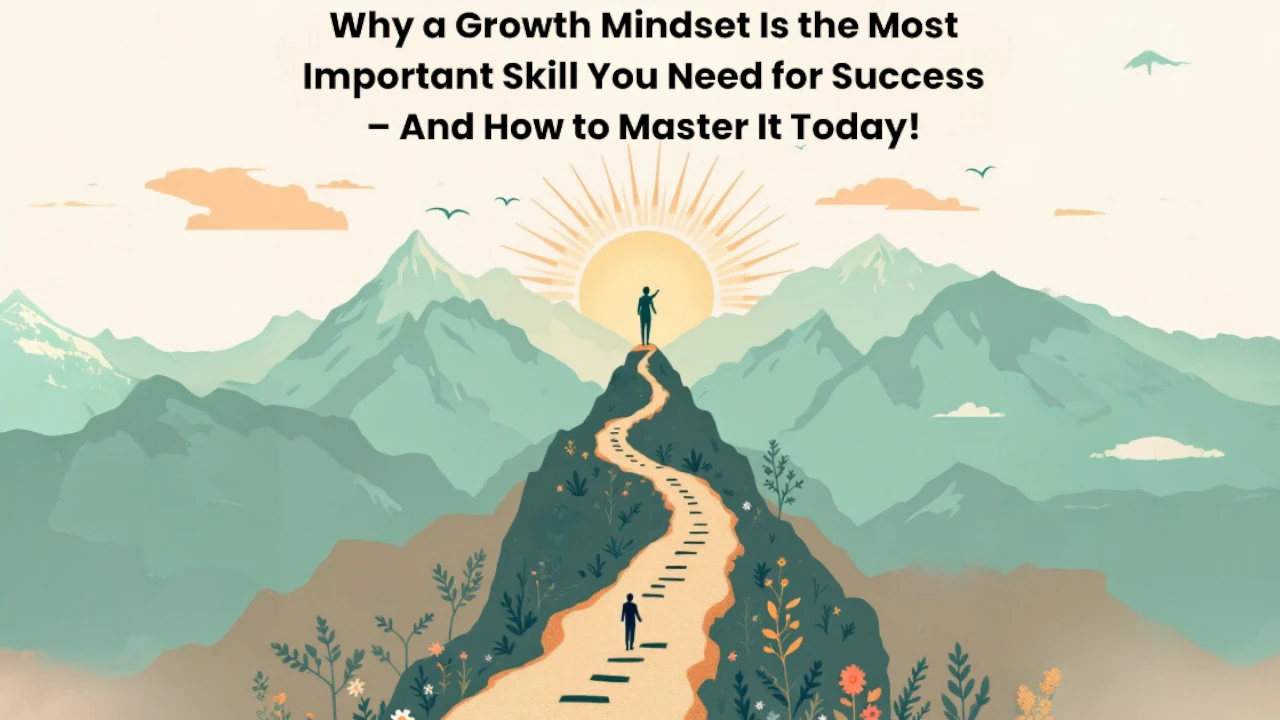
Success isn’t just about talent or luck—it’s about how you approach challenges, setbacks, and learning opportunities. That’s where a growth mindset comes in. Unlike a fixed mindset, which believes abilities are static, a growth mindset empowers you to embrace learning, adapt, and improve continuously.
Whether you’re an entrepreneur, professional, student, or lifelong learner, mastering a growth mindset is the most important skill for achieving your goals. This article will guide you step by step on why it matters and how to cultivate it effectively.
Understanding the Growth Mindset
A growth mindset, a concept popularized by psychologist Carol Dweck, is the belief that your abilities and intelligence can be developed through dedication, effort, and learning.
- Key Traits of a Growth Mindset:
- Embraces challenges instead of avoiding them
- Learns from criticism rather than ignoring it
- Persists through obstacles
- Celebrates effort, not just results
By contrast, a fixed mindset limits your potential. It causes fear of failure, resistance to change, and avoidance of learning opportunities.
Why a Growth Mindset Drives Success
The link between a growth mindset and success is clear:
- Enhanced Resilience: You bounce back from setbacks instead of giving up.
- Continuous Learning: You constantly improve skills and knowledge.
- Better Problem Solving: You see challenges as opportunities to innovate.
- Stronger Relationships: Embracing feedback strengthens personal and professional bonds.
Studies show that individuals with a growth mindset outperform peers because they focus on effort, adaptation, and learning rather than being limited by self-doubt.
Overcoming the Fixed Mindset Trap
Recognizing a fixed mindset is the first step toward growth. Common signs include:
- Avoiding challenges for fear of failure
- Ignoring feedback or constructive criticism
- Feeling threatened by others’ success
- Believing talent alone determines outcomes
Action Step: Start noticing when you think “I can’t” or “I’m not good at this.” Challenge those thoughts by reframing them as opportunities to learn.
How to Cultivate a Growth Mindset Today
Developing a growth mindset is a deliberate process. Here’s how to start:
1. Embrace Challenges
Seek opportunities that stretch your skills. Instead of avoiding tasks that seem difficult, view them as learning experiences.
2. Learn from Feedback
Feedback is a gift. Listen actively, evaluate it objectively, and apply it to improve.
3. Focus on Effort, Not Outcome
Celebrate the effort you put in rather than only the results. Progress is more sustainable than instant success.
4. Replace Negative Self-Talk
Change “I can’t do this” to “I can learn how to do this”. Words shape your mindset.
5. Surround Yourself with Growth-Oriented People
Engage with individuals who challenge, inspire, and support your learning journey.
6. Reflect and Journal
Document successes, failures, and lessons learned. Reflection reinforces growth and awareness.
Growth Mindset in Professional Life
A growth mindset has tangible benefits in the workplace:
- Leadership: Leaders with growth mindsets encourage innovation and collaboration.
- Career Development: Employees with a growth mindset pursue skill-building opportunities, leading to promotions and higher performance.
- Team Success: Teams adopting growth principles adapt faster and overcome challenges collectively.
Businesses now prioritize mindset development alongside technical skills for long-term success.
Growth Mindset in Personal Life
Your mindset also impacts personal growth:
- Relationships: Viewing conflicts as learning opportunities strengthens bonds.
- Health: Growth-minded individuals persist with healthy habits despite setbacks.
- Financial Growth: A willingness to learn about investing, budgeting, or entrepreneurship fosters financial success.
A growth mindset creates a cycle of continuous improvement across all aspects of life.
Tools and Techniques to Strengthen Your Growth Mindset
To accelerate your growth mindset journey, use these practical strategies:
- Reading and Learning: Books like Mindset by Carol Dweck and courses on personal development provide guidance.
- Mentorship and Coaching: Gain perspectives from experienced individuals.
- Mindfulness and Meditation: Increases self-awareness and helps manage negative thought patterns.
- Visualization Techniques: Imagine overcoming obstacles and succeeding to reinforce positive beliefs.
Consistency is key. Small daily actions compound into massive long-term growth.
Common Mistakes When Developing a Growth Mindset
Even with intention, pitfalls exist:
- Seeking perfection instead of progress
- Ignoring emotions when facing failure
- Comparing your growth to others
- Thinking mindset alone guarantees success (action is still required!)
Recognizing these mistakes ensures your growth journey is realistic and sustainable.
Measuring Your Growth Mindset Progress
Track your mindset evolution with these indicators:
- Increased willingness to take on new challenges
- Reduced fear of failure
- Active pursuit of feedback
- Resilience during setbacks
- Noticeable skill and knowledge improvements
Journaling and regular self-assessment keep your growth trajectory on track.
FAQs About Growth Mindset
What is the difference between a growth mindset and a fixed mindset?
A growth mindset believes abilities can improve with effort; a fixed mindset believes talents are static.
Can a growth mindset be developed at any age?
Yes! Mindset is malleable, and anyone can cultivate a growth-oriented approach with practice.
How does a growth mindset affect leadership?
Leaders with growth mindsets encourage innovation, mentor employees, and embrace challenges rather than avoiding them.
Does failure harm a growth mindset?
Failure is essential—it provides opportunities to learn, adapt, and improve skills.
How long does it take to master a growth mindset?
There’s no fixed timeline. Daily intentional practice, reflection, and application over weeks and months yield noticeable results.
Conclusion: Start Mastering Your Growth Mindset Today
A growth mindset is more than a concept—it’s the foundation for personal and professional success. By embracing challenges, learning from feedback, and focusing on effort over outcome, you unlock your potential to achieve goals that once seemed impossible.
Success begins with your mindset. Start today by identifying fixed-mindset patterns, adopting growth-oriented habits, and committing to continuous learning. Over time, these small shifts lead to profound transformation, enabling you to thrive in every area of life.
For further insights on cultivating a growth mindset, explore resources like Mindset Works or Harvard Business Review on Growth Mindset